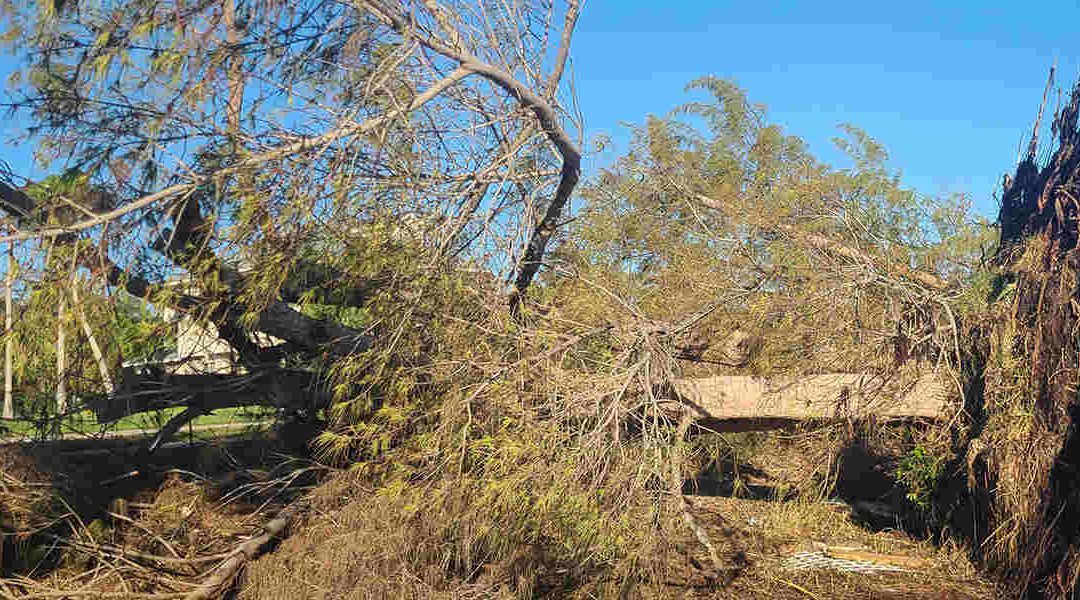
Given the frequency of stormy weather in east-central Florida, local trees can regularly suffer damage. Some damage, like split trunks, is obvious, while other signs of storm damage on trees aren’t as easy for a homeowner to see. You may want to ask experts offering tree services in Melbourne, FL, for help with how to identify storm damage on trees.
Learn how to perform a tree damage assessment after storms with the help of professionals.
Inspecting the Trunk for Missing Bark or Hollow Spots
A starting point for identifying tree damage in Melbourne, FL, after a storm is the trunk. Significant damage to the trunk makes the tree more susceptible to falling unexpectedly, placing your home and family in danger.
If the trunk has missing bark after a storm, this indicates severe damage from which the tree may struggle to recover. The missing bark might unveil cracks or hollow spots that put the structure of the trunk at risk.
If your tree has a V-shaped crotch at the top of the main trunk, learning how to identify storm damage on trees should involve an inspection of this area. The stress on the crotch is significant during a storm, and it could start to show signs of splitting.
Looking for Broken Branches in the Canopy
Limbs that are cracked and broken but that remain hanging in the canopy are dangerous. Such branches could fall unexpectedly, causing damage or injuries as they drop to the ground.
Cracked branches can provide an avenue for insects or diseases to infect the tree. Tree care professionals will make clean cuts when trimming these branches, allowing the tree to heal naturally and protect itself.
Post-storm tree inspection tips from experts say that homeowners should not use a ladder to inspect damage in the canopy because of the risk of injury. Tree care companies use safe climbing equipment or bucket trucks when evaluating tree health after storms.
Seeking Clues That Indicate Underground Root Damage
As a key step in identifying storm damage on trees, pay attention to signs that indicate potential root damage. Issues with roots are especially difficult for homeowners to identify without help from experts because they are hidden under the soil.
If you notice that some roots are visible and exposed because the soil was washed away in the storm, you may need help from a professional.
Measuring Any Change in the Alignment of the Tree
If your tree has a severe lean after the storm that didn’t exist previously, you should call for immediate help. Some trees grow naturally with a lean, but if the angle worsens after a storm, the tree is in danger.
Another sign that your tree’s alignment changed in the storm is that you now see roots pulled loose from the ground. A slightly uprooted tree could be saved, but if a large section of the roots pops out of the soaked ground, the tree may need removal.
Any tree that has a 15-degree or greater lean could fall at any time. Experts may be able to use cabling and bracing to straighten the tree and help it remain healthy.
East Coast Arbor Pro’s Experts Offer 24-Hour Emergency Tree Care After a Storm
After a storm hits your property, you might want help with identifying storm damage on trees. Trimming the damaged areas, cleaning up fallen branches, and evaluating tree health after storms are all skills that the experts at East Coast Arbor Pro can deliver.
Our professionals will treat the damage. If the tree cannot be saved, our team helps with explaining and understanding emergency tree felling techniques. For a free cost estimate, contact us today at (321) 917-9342.