What are the logistics of removing large trees near a house? The last thing you want is thousands of dollars in damages because they fell the wrong way.
As a long-standing provider of dependable tree services in Melbourne, FL, we at East Coast Arbor Pro can lend some insight into safe arboreal practices.
Why Remove a Tree in the First Place?
While trees can bring shade and beauty to any yard, they might also have the following potential drawbacks:
- Safety concerns: If a strong Florida storm rolls through or the tree’s structure deteriorates due to disease, those hefty limbs could come crashing down and endanger your property’s inhabitants.
- Property damage: Overhanging branches could end up damaging roofs, windows, or vehicles. Roots might also infiltrate pipes or crack foundations, creating unnecessary headaches down the road.
- Daily inconveniences: Overgrown trees can harm other plants in your yard and scatter debris everywhere. These nuisances disrupt your outdoor enjoyment and cost you time spent on constant clean-up.
How To Safely Remove a Large Tree Near Your House
Have you decided that a particular specimen is creating more trouble than it’s worth? Follow these steps for cutting down a tree close to your home.
Prepare Your Gear
If you want to know what to consider before removing a tree near a house, start by giving yourself ample protection. Wear a hard hat, goggles, thick gloves, and sturdy boots.
Here are the tools you need for performing the actual cut:
- A chainsaw for making easy and precise cuts
- An axe or a handsaw for finer or smaller branches
- Wedges to prevent the tree from pinching the saw
- A rope to help guide the tree’s fall direction
- A ladder for safely reaching higher branches when necessary
Gauge the Fall Direction
Choose a clear area, so nothing blocks the tree’s path as it drops. Look closely at the specimen’s natural lean, canopy distribution, and root structure to approximate its fall direction. If you hire an arborist for removing large trees near a house, they often use specialized tools like ropes, pulleys, or plumb lines for accuracy.
Prune the Branches
One of the best practices for tree removal near structures is taking the time to prune the branches. A bare canopy helps control the fall and prevents unnecessary snags.
Make the Right Cuts
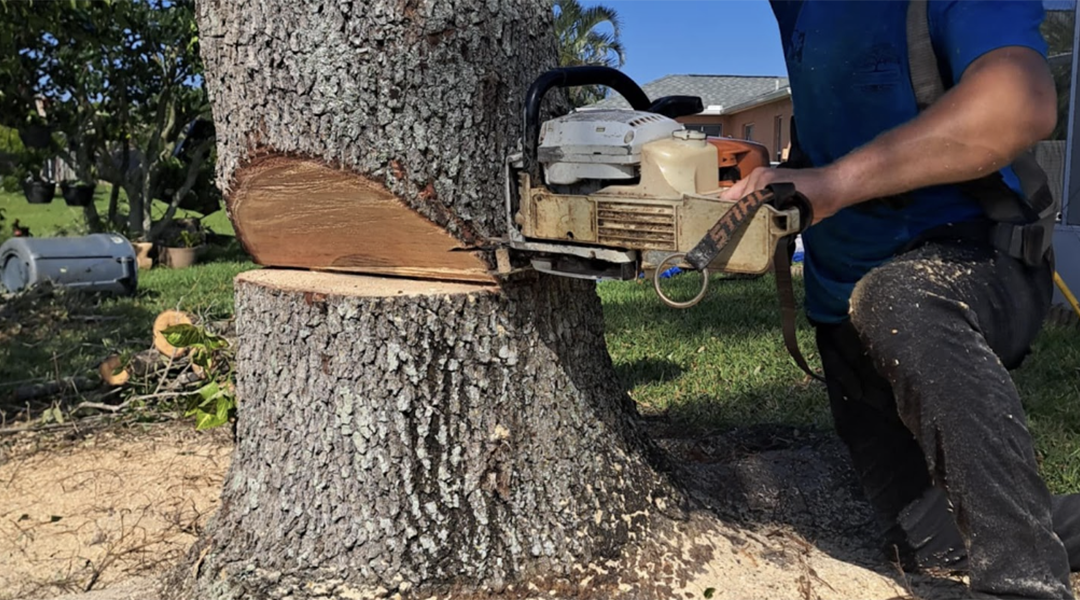
Cut a notch at the trunk’s base on the side you want the tree to fall. Then, make a second cut opposite the side of the notch. As soon as the second cut meets the first, move away from the tree quickly.
Remove the Stump
People often overlook the stump after removing a tree, but it’s crucial. This leftover part can become a tripping hazard, attract pests, or even regrow. To fully clear the area, consider grinding it down for efficiency or digging it out manually.
Should You Handle This Task Yourself?
Understanding the steps of removing large trees near a house is one thing, but carrying them out is an entirely different matter. Once you’re looking up at that towering specimen and handling sharp tools, the reality sets in. It’s a task that demands precision, the right equipment, and a solid understanding of safety protocols.
That’s why calling in professionals is always the smartest choice. They have the experience, tools, and training to do the job safely and efficiently, leaving you with peace of mind.
Expert Tree Cutting Specialists in Melbourne, FL
Why endanger yourself and your property when you can leave it to East Coast Arbor Pro instead? Our experienced crew is capable of removing large trees near a house with zero incidents. Contact us today or read our blog post on cutting a leaning tree.