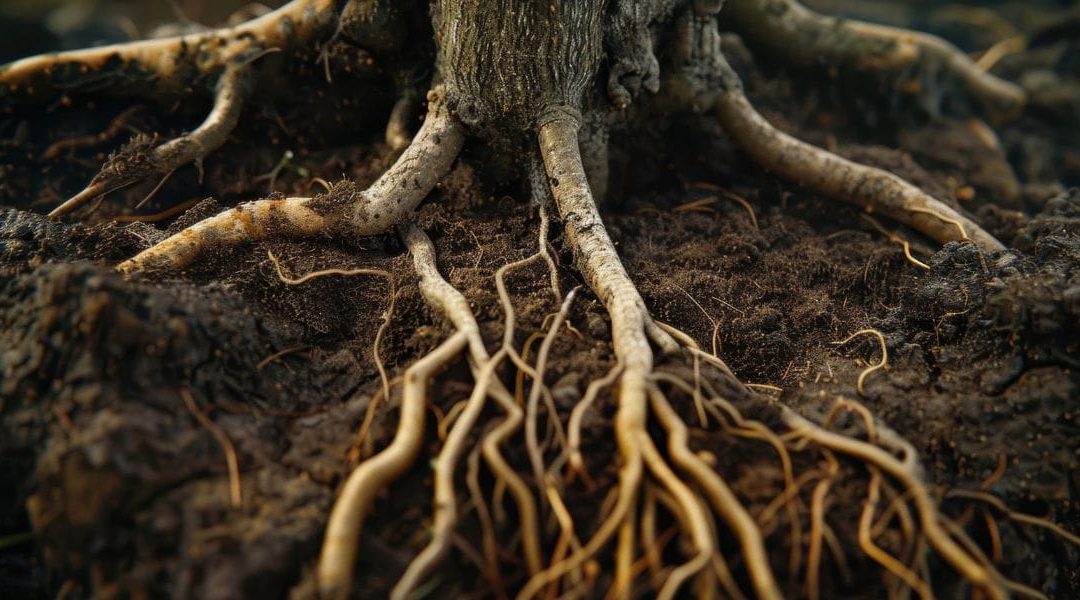
If you have trees growing near your home’s foundation or a sewer line, you may have wondered whether trimming branches above might slow down what the roots do below. The question makes intuitive sense, but the science points in a different direction.
If you’ve asked, “Does tree trimming prevent root growth?” East Coast Arbor Pro has answers for you. We’re the leading local provider of expert tree services in Titusville, Florida, and in this post, we’ll explain how the canopy and root systems connect and what actually drives underground growth in our region’s growing conditions.
How Trimming Trees Affects Root Growth Below the Surface
The connection comes down to photosynthesis and energy distribution.
Regular professional tree trimming removes overgrown or hazardous branches to manage size and shape. Pruning is a different type of service that targets specific branches for structural or health reasons and follows stricter arboricultural standards. Both services reduce leaf area, and the effect on roots is similar.
Leaves produce the sugars that fuel every part of a tree, including root development. When branches are removed, the tree temporarily produces fewer sugars, which can slow root activity in the short term. Healthy trees rebalance quickly, often within a single growing season, because the remaining foliage can conduct photosynthesis more efficiently.
Brevard County’s sandy, shallow soils allow live oaks, slash pines, and laurel oaks to spread roots wide rather than deep. A dense, untrimmed canopy acts like a sail in the wind, placing enormous leverage on the root system during every storm.
Certified arborists reduce that wind load through both trimming and structural pruning, helping roots face less stress and trees stay anchored more securely through hurricane season.
What Tree Trimming Does Not Do
Can tree trimming stop roots from growing? Trimming the canopy does not prevent roots from growing toward water, nutrients, or open soil. Root growth follows moisture and space, not branch length.
If roots are pushing toward a foundation or lifting a sidewalk, removing overhead branches will not redirect them. More effective solutions for invasive root problems may include:
- Root barriers installed along property edges or hardscape
- Strategic species selection before planting
- Root pruning performed well away from the trunk by a certified arborist
When Poor Trimming Can Harm the Root System
The connection between poor trimming and root decline arises from overall increases in stress rather than from any direct impact on the roots. These practices force the tree to spend energy on recovery rather than growth:
- Topping or cutting the main leader back to stubs
- Removing more than 20 to 25% of the canopy in a single session
- Making improper cuts that invite decay
A chronically stressed tree develops a weaker root system over time and becomes more susceptible to fungal disease. It will be at greater risk of uprooting during the Space Coast’s regular high-wind events.
Different species around Brevard County respond to canopy work in distinct ways:
- Live oaks benefit from work that improves airflow and reduces storm risk.
- Laurel oaks, which grow faster and carry weaker wood, need regular attention to prevent branch failure.
- Palms respond to frond removal rather than canopy thinning and follow their own care standards.
Call East Coast Arbor Pro To Schedule Expert Tree Trimming in Titusville
So, does tree trimming prevent root growth? As we’ve shown, it doesn’t. Proper canopy management actively supports a stronger, better-anchored root system by reducing the mechanical stress that storms impose.
The ISA-certified arborists with East Coast Arbor Pro provide comprehensive tree care services throughout Titusville, Florida, and the surrounding Brevard County communities. We apply professional tree trimming techniques that protect both the canopy and the root system for the long term.
Call (321) 917-9342 or contact us online today to request a free estimate.