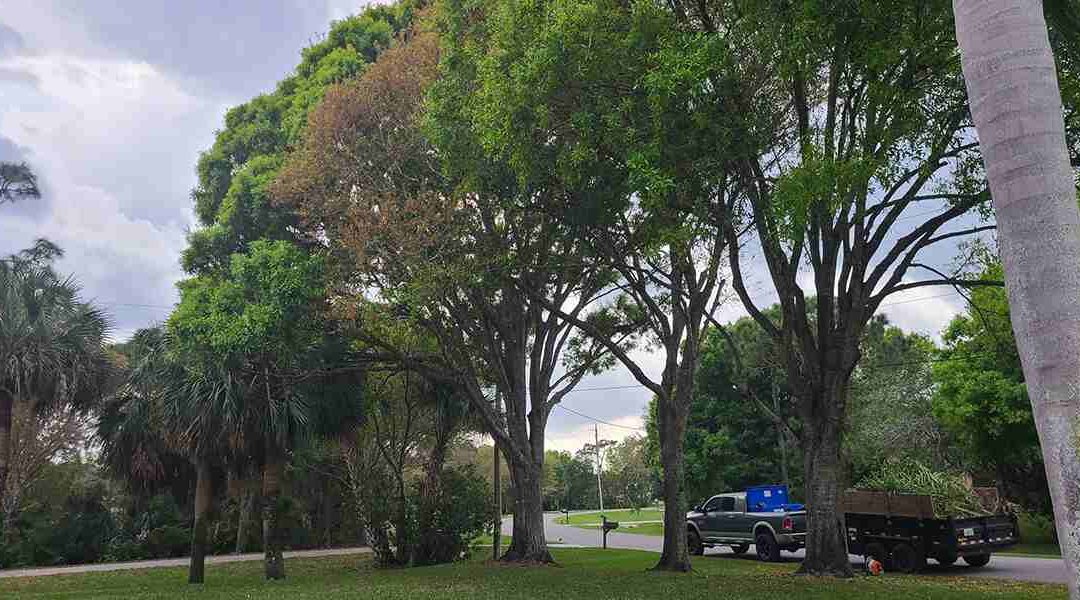
It’s not easy planting or regularly maintaining a tree. It takes research, the right kind of soil and watering schedule, and the occasional professional care. You then expect the tree to reward you with lush and vibrant foliage, but different types of tree fungus can void your hard work, giving you the opposite effect.
How Do Trees Develop Fungus
Like household mold and mildew, tree fungi travel in spores. These spores develop from pathogens, symbionts, or saprobes found on diseased foliage, plant debris, and affected soil. Once they become airborne and attach to nearby greenery, healthy trees obtain fungal infections. These infections only worsen in time if you refuse to call for tree services in Palm Bay, FL.
Not only does the wind carry the fungi, but the following also plays a role in transporting them:
- Birds and insects that travel from one branch or tree to another
- Contaminated soil that affects healthy roots
- Water, which splashes spores from the ground onto the tree
- Affected tools that you forgot to clean after caring for diseased trees
Common Types of Tree Fungi
Below, we’ll delve into the different types of tree fungus by category.
Wilt
Dutch elm disease is one version that attacks these trees’ vascular systems (usually via elm bark beetles). In turn, Dutch elms no longer circulate water and nutrients throughout their system, causing leaves to discolor, curl, and drop prematurely. Since this disease usually leads to death and is extremely difficult to cure, arborists suggest planting resistant cultivars instead.
However, several types of wilting affect unique tree species.
- Oak wilt affects all oaks, but red oaks are at a higher risk, especially through sap beetles. Browning leaves or leaf drop in the spring and summer are key indicators of it.
- Verticillium wilt affects a wider array of tree species. Once the fungi become soil-borne, it leads to slow growth, paling leaves, and inevitable death since no fungicides can kill it.
Powdery Mildew
Luckily, powdery mildew is one of the types of tree fungus that is not as serious as wilting, but it can be just as aesthetically displeasing. This foliar disease attacks the leaves first, leaving a white powdery appearance on affected ones. While the dusty leaves cannot retain their former glory, you can cut them off and space your plants apart for better air circulation to prevent further leaf infection.
Sooty Mold
While powdery mold comprises a white, flaky substance on the leaves, this foliar disease leaves a black film stained on the foliage. Like the former, simply cut the affected leaves and practice preventative measures. However, unlike sooty mold, this disease travels via scaly insects, so use neem oil to get rid of them and, in turn, remedy the problem.
Other Types of Fungal Diseases
Other fungal diseases you should be wary of include the following:
- Anthracnose is a common foliar disease, especially in dogwood. It contributes to earth-toned leaf spots alongside blotches on berries and wilting leaves.
- Thousand canker diseases derive from walnut twig beetles that bury into the bark, causing sunken-in and discolored sections. Cankers halt nutrient and water transfer around the tree, killing limbs and, eventually, the tree.
- Root rot, such as Armillaria and Phytophthora root rot, proves fatal. So practice direct ground-level irrigation without wetting the foliage and trunk and ensure proper drainage.
The Arbor Pros You Need!
At East Coast Arbor Pro, we want your property to look as breathtaking as you originally intended. So if infestations and types of tree fungus are getting in the way of that, trust us with tree healthcare tips. Our ISA-certified arborists are available 24/7, so call (321) 917-9342 for a free estimate today!