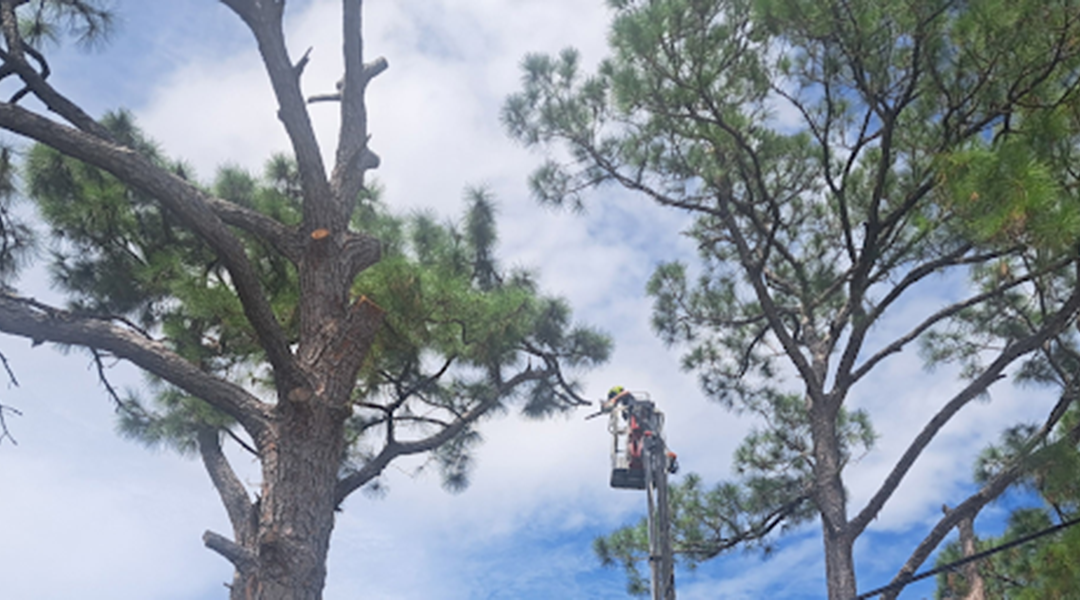
Pruning helps trees maintain their health when wildlife can’t. However, we can’t quite reach the same places squirrels and birds can.
You can hire tree services in Rockledge, FL, to take care of your tall trees. We have the tools and equipment for a safe session. Even so, we’ll discuss pruning tall trees safely, what you can do, and when it’s best to rely on professional services.
Why Prune Your Trees?
You’ve likely heard of pruning and trimming. Trimming refers to aesthetic shaping and growth control, while pruning helps maintain the plant’s internal health.
So, pruning tall trees in your yard should check off at least one of several boxes, such as:
- No visibly dead, dying, or diseased branches left on the tree
- Better sunlight and airflow within the tree’s canopy for fungal regulation and prevention
- Less likely to drop branches or cause property damage during storms
- Better balance for more even growth during active growing seasons
How To Make the Best Cuts
While not exactly a step-by-step guide to tall tree pruning, you can use our advice while promoting a safety-first mindset.
Optimal Tools
When pruning branches within your range, you need to use the right tools and form to get the most out of the pruning session. Clean, sharp pruners can help you make clear cuts in the branches. Messy cuts may cause bark injuries that the tree will have difficulty healing.
Know Its Limits
Just like you have physical limits, so does your tree. Best pruning practices suggest that you should never “top” it, despite what some people may say. You should also never prune more than 25% of a tree’s canopy each year.
Either action can stress the tree too much, reduce its energy production, and cause it to die.
Time It Right
Pruning an actively growing tree can cause substantial damage and scarring. Instead, you’re better off pruning during its inactive, dormant seasons. We recommend looking up the dormant season for your specific tree.
Generally, most deciduous trees enter this resting period from late fall to early spring. Late winter appears to be the sweet spot for most deciduous pruning sessions. Ask about our suggestions for pruning tall trees, like oaks, elms, and spring-blooming trees!
Place It Right
Learning how to cut large trees properly isn’t rocket science, but it’s not the easiest either. For example, you should cut a branch a bit before the collar, a small swollen area right around the base.
Cut too close to the collar, and you can damage the healing tissues. However, leaving too long a stub could cause an infection or decay. Find a happy medium between the two, and cut at a clean, 45° downward angle to break off the branch.
Call Us for the Best Methods To Prune Tall Trees
Hiring East Coast Arbor Pro is the best way to reach the top of your trees, especially for more dangerous circumstances:
- If the branch is over 20 feet high
- When near buildings or electrical lines
- For large branches requiring chainsaws
- No steady ground near the bottom of the tree
Don’t sacrifice your health and safety for your tree when our experts are available. Our team has professional tools for pruning tall trees, like bucket trucks, loppers, saws, rope harnesses, and more. We also have years of training and experience using these tools, as well as insurance in case of any workplace accidents.
Can you cover sudden medical emergencies if something happens while pruning tall trees in your yard? Are you ready to deal with the damage caused by common tree pruning mistakes? If you couldn’t immediately answer “yes”, call East Coast Arbor Pro at (321) 917-9342 today.